

Abstract:
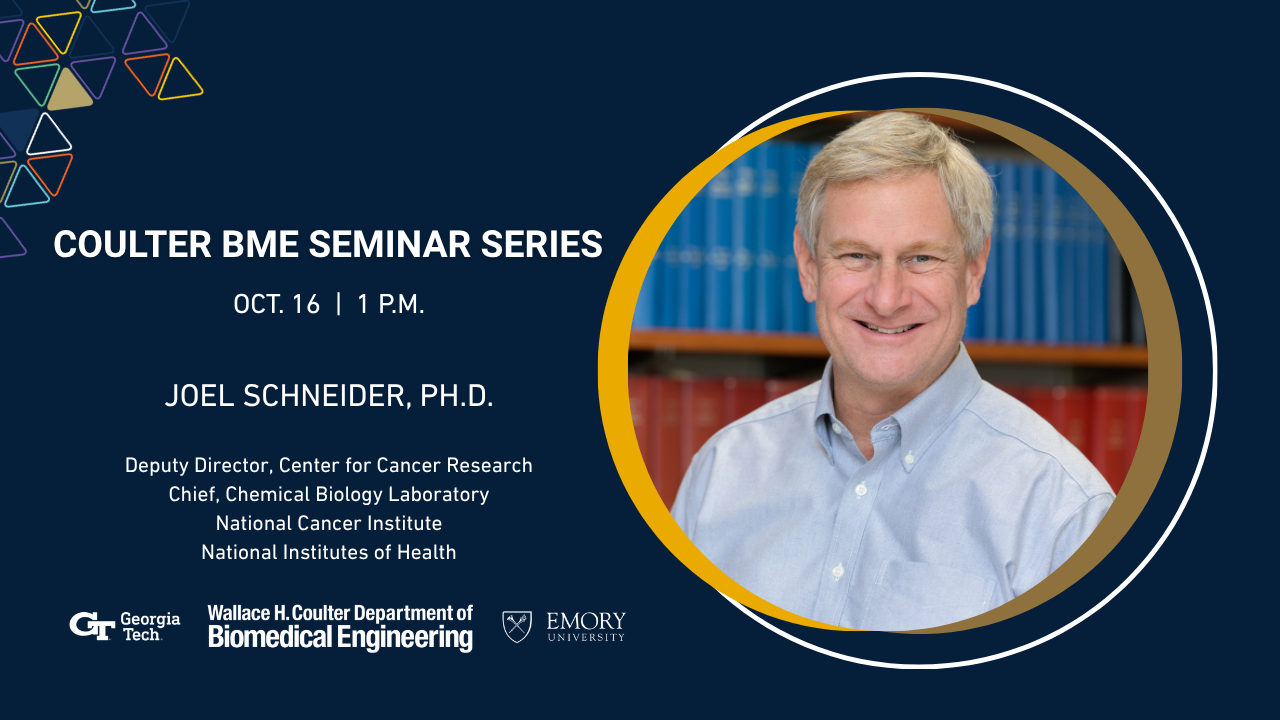
Peptide hydrogels formed by self-assembly are increasingly used in medical applications ranging from drug delivery to wound care. The chemical composition and stereochemistry of the peptides, the mechanisms by which they assemble to form a given material, and the structures of the mesoscopic assemblies underlying material formation all influence the mechanical and biological properties of these materials. Dr. Schneider will explore these factors in molecular detail to develop materials for clinical applications, including antibacterial wound dressings, delivery of miRNA nanoparticles for mesothelioma treatment, and modulation of the immune system.
Bio:
Dr. Schneider received his Ph.D. in Organic Chemistry from Texas A&M University with Jeffery Kelly and then went on to the University of Pennsylvania School of Medicine, Department of Biochemistry and Biophysics where he was a George W. Raiziss Fellow with William DeGrado studying protein design. In 1999, he began his independent career at the University of Delaware as an assistant professor of Chemistry and Biochemistry and was promoted to associate and then full professor in 2009 with a secondary appointment in Materials Science and Engineering. He joined the NCI in 2010 as lab Chief of the newly established Chemical Biology Laboratory and was later appointed Deputy Director in 2015. He currently serves as the president of the American Peptide Society and Executive Editor of Biopolymers-Peptide Science.